Description
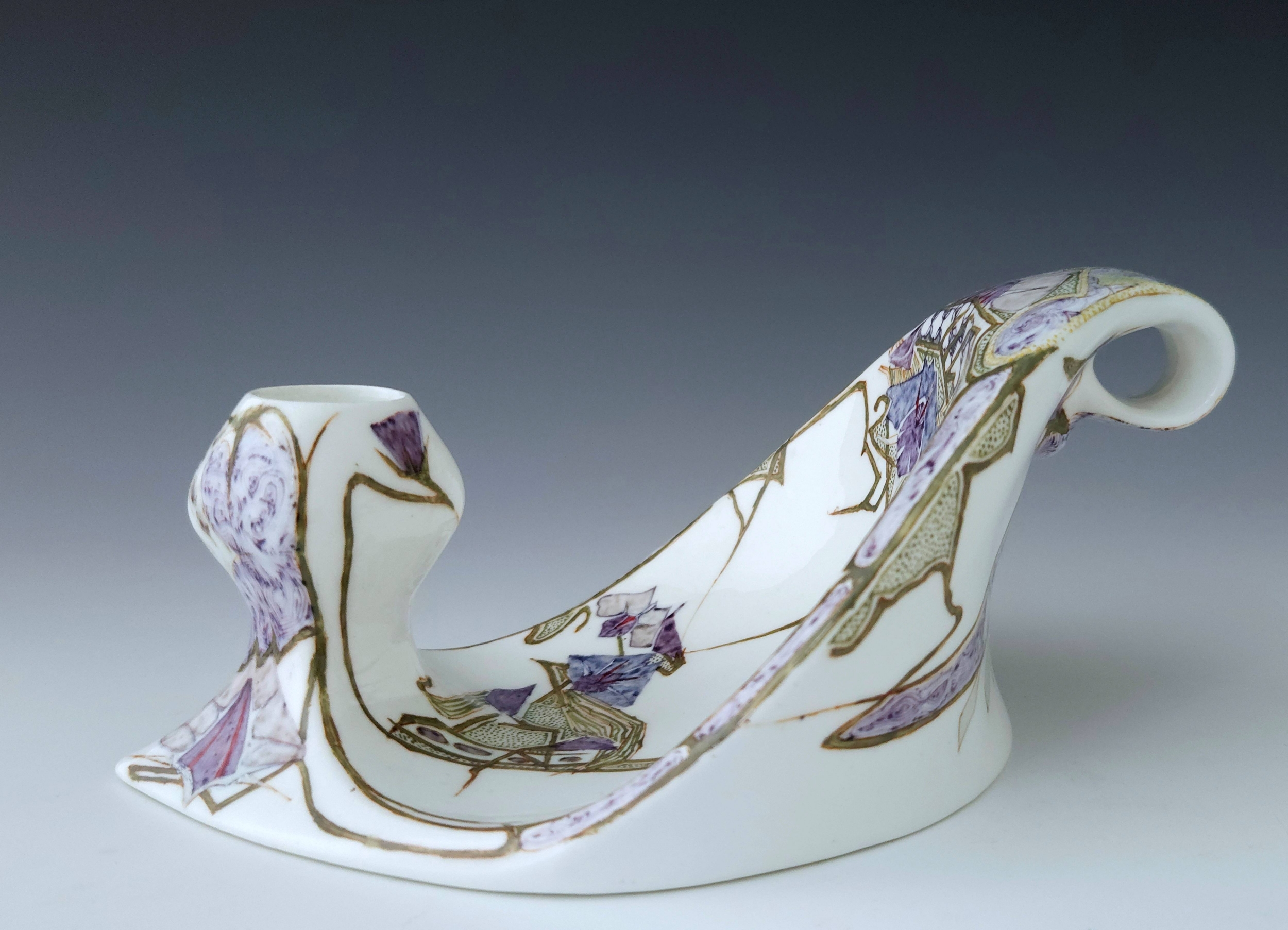
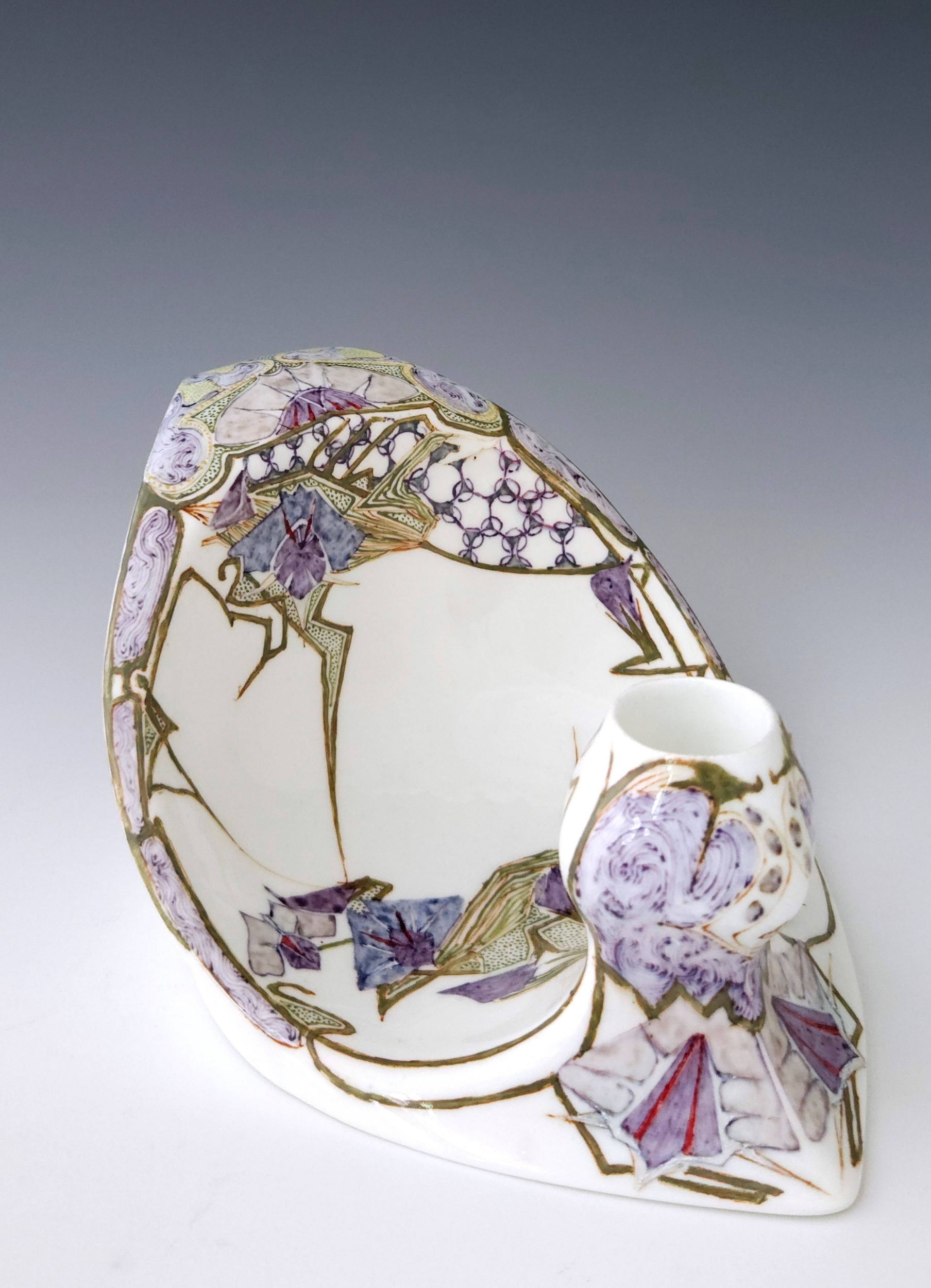
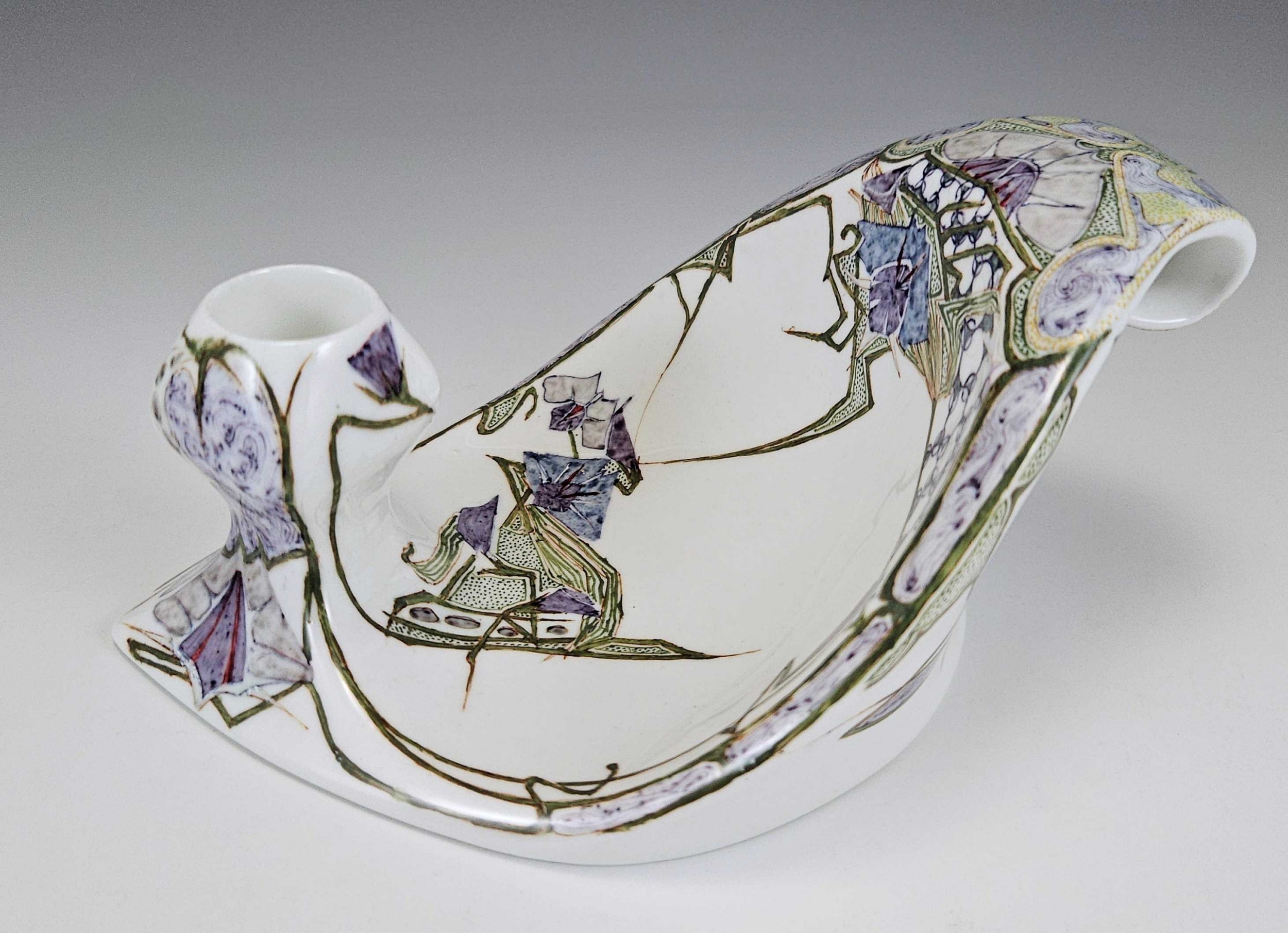
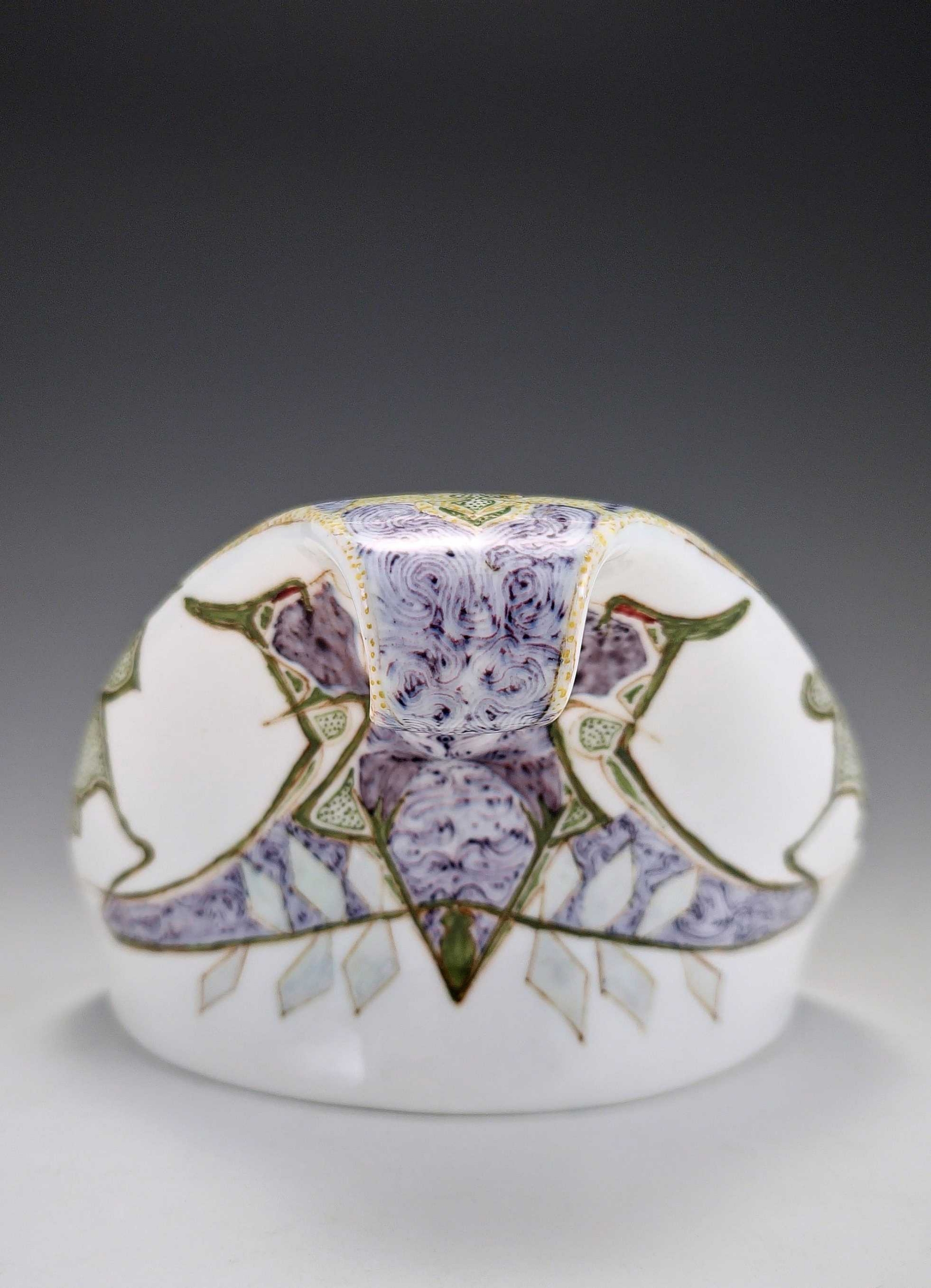
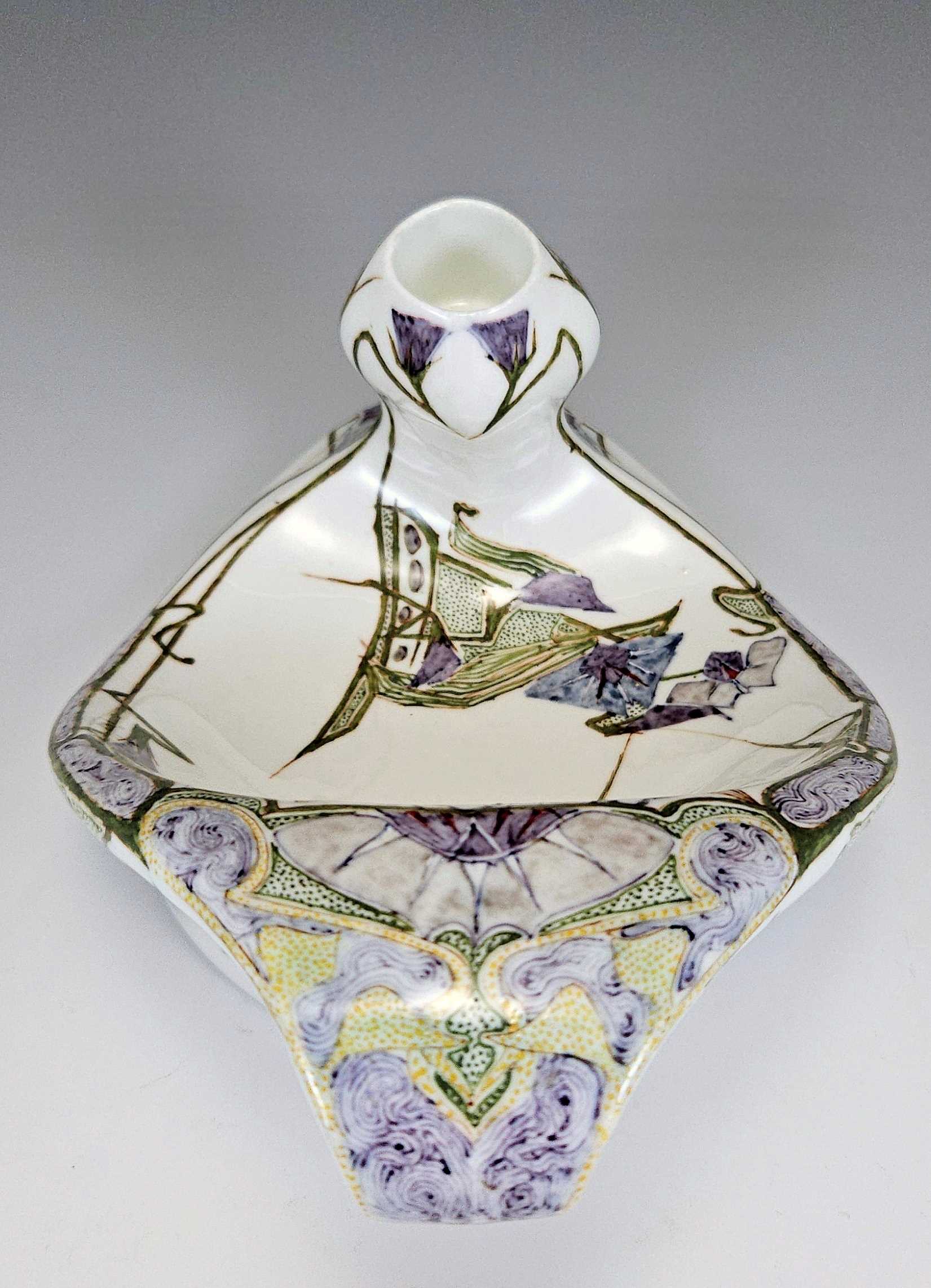
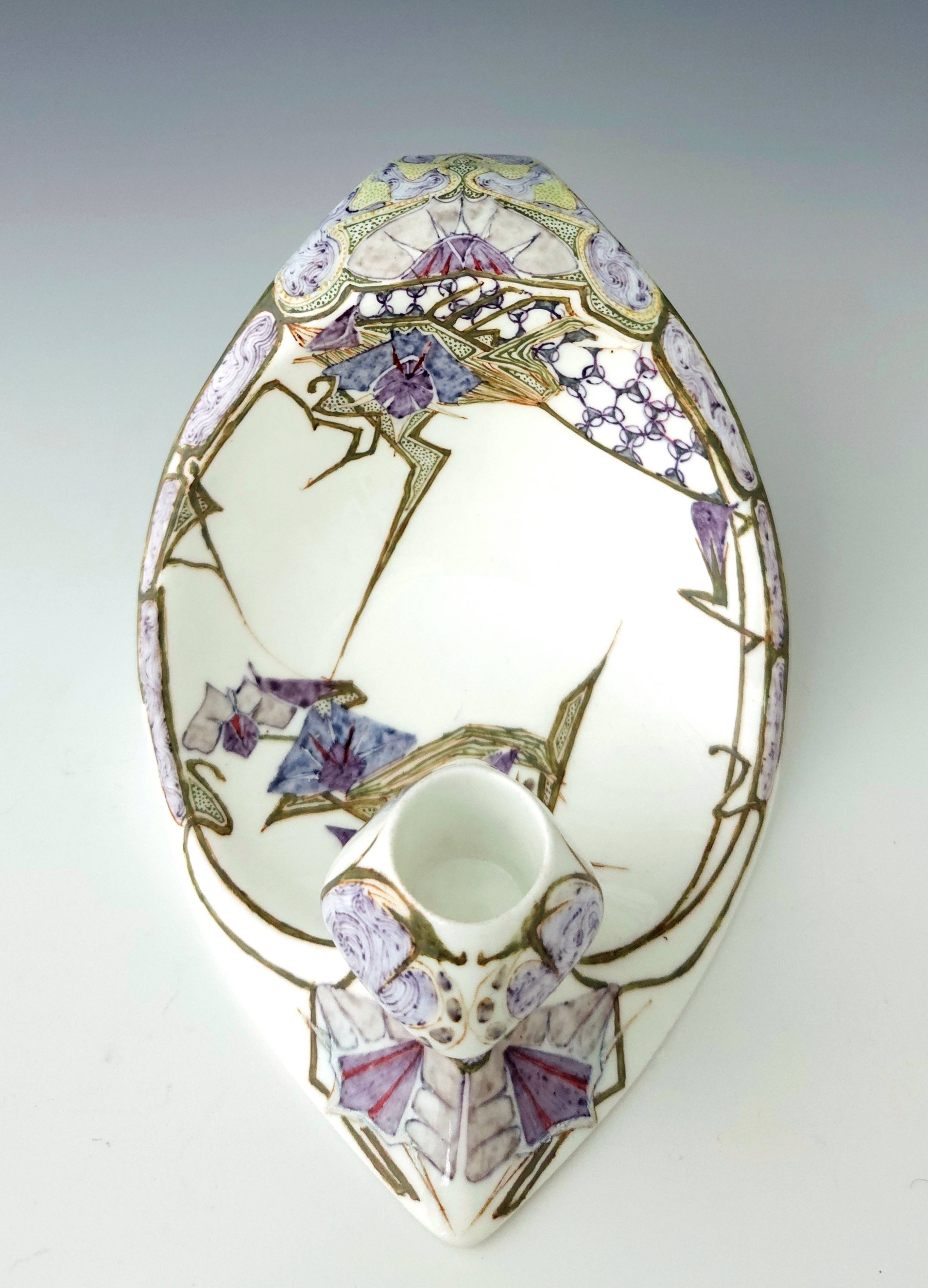
A rare Rozenburg Den Haag eggshell porcelain chamberstick featuring an exceptionally modern, largely abstract decoration, executed in mauve tones with green and (gold) yellow. The painting appears particularly spontaneous and freely executed, almost playful and sketchy. Yet, it is also very meticulous: the geometric and graceful lines, featuring both clean and elegant Art Nouveau lines and ornaments. In the decoration, a few elements stand out alongside the (abstract) floral motifs: a setting sun is visible atop the wide curved ear, the ‘handle’, and a farmhouse can be recognized in the ‘bowl’ of the candlestick. The chamberstick’s distinctive sculptural form, based on the Dutch 18th-century chamberstick but executed organically in the typical Rozenburg style, is asymmetrical and undulating, with a graceful curve reminiscent of a leaf.
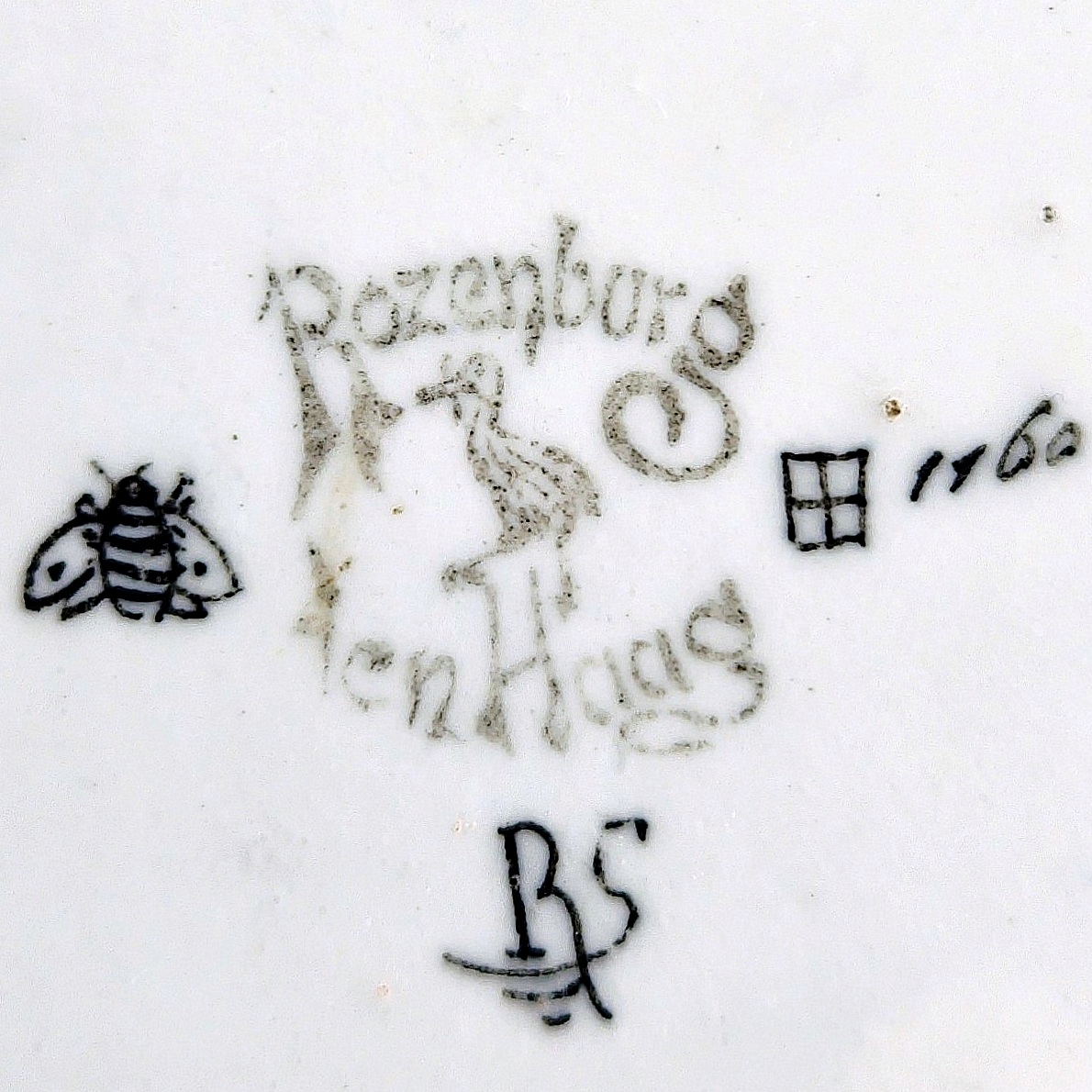
The chamberstick, model 88p, is 8 cm high, 18 cm long, and 13 cm wide, marked with the factory stamp, year code, monogram RS, and work order number 1160; August 1900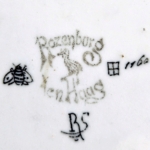
Origin and history:
Collection Dr. Martin Eidelberg
The chamberstick was painted, along with 2 other examples, in the week of August 8, 1900, by Roelof Sterken and Johannes Adrianus Haafkens. Up to that time, starting in March 1899, 18 chamberstick, model 88p, had been painted and later, from May 1900, exhibited at the World Exhibition in Paris. Almost all of them were sold there; apparently, the model was very well received. At the end of May 1900, Backers, agent for Rozenburg in Paris, sent letters to Jurriaan Kok, in which he wrote: ‘for the production of new items intended for the exhibition, it is necessary that there be a lot of mauve (violet) among them; this is very well received’ (source: Rozenburg Plateel uit Haagse kringen, Yvonne Brentjens, p. 147).
The 3 chambersticks that were painted in August, including this one, were sold at the World Exhibition. One to Charles Mayer & Co in Indianapolis, the other to Walter Kimball & Co in Boston.
This chamberstick, however, likely remained in Europe, as Dr. Martin Eidelberg found it in the Galerie L’Ecuyer on Avenue Louise in Brussels in the late 1960s and added the chamberstick to his very impressive collection of American and European ceramics. A large part of his collection has been donated to the MET Museum in New York in recent years.
Rozenburg produced a total of 75 pieces of the Model 88p candlestick (over 15 years). However, very few examples are known, probably due to its fragility and the temptation to actually use it as a candlestick, for which it is both too fragile and too valuable. But I succumbed to that temptation anyway and made a video of it, shivering and shaking! Incidentally, the candlestick is (even after the recording…) in impeccable new condition; I would almost say, never used…
Museums:
Kunstmuseum Den Haag; chamberstick with decoration of a lizard and honeysuckle
Rijksmuseum Amsterdam; chamberstick painted with a parrot
Keramiekmuseum Princessehof Leeuwarden; chamberstick with floral decoration of oak leaf, fruit, and parrot